
“Meandering cows, tenacious bicyclers, belching taxis, rickshaws, fearless pedestrians and the occasional mobile ‘cigarette and sweets’ stand all fought our taxi for room on the narrow two-lane road turned local byway.”
-Jennifer S. Alderson
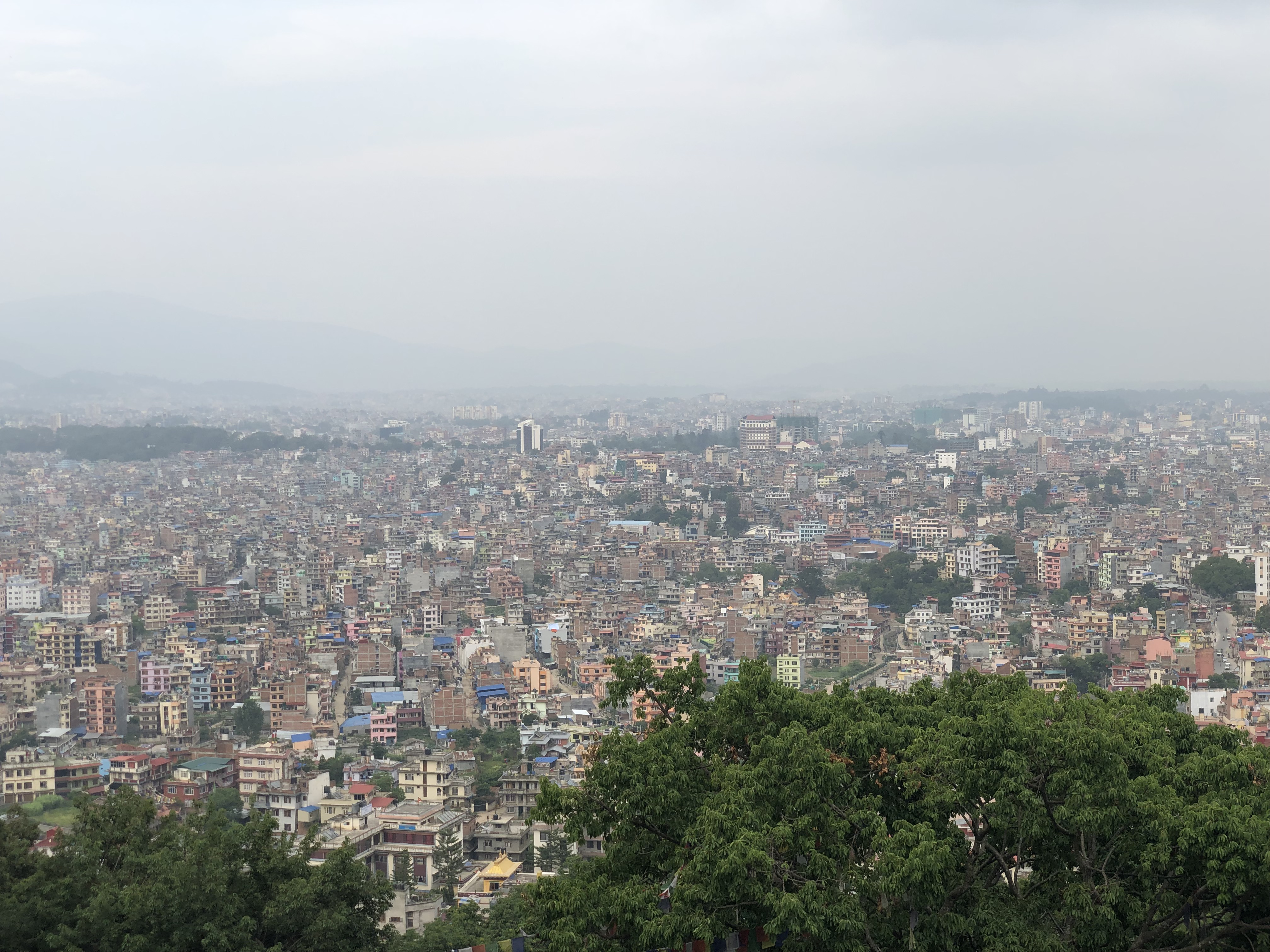
Just four weeks after I returned from my trip to Bosnia and Herzegovina, I suddenly realized that I had to exit Qatar — on the mid-day of my visa expiration date at that! Like a bull in a china shop, I booked the next available flight possible, which happened to be Nepal. Alas! I did not have time to research about the country, had no hotel booked, and, worse, I did not have much money with me because I had just returned from a trip. But I somehow made it possible. Let me share my story about my impromptu five-day stay in Nepal on a shoe-string budget. It was incredibly exciting and challenging at the same time!
Nepal is known as a Hindu and a Buddhist country. It is home to the famous Lord Shiva temple, the Pashupatinath Temple, where Hindus from all over the world come for pilgrimage. It is about a five-hour flight from Qatar. I was feeling nervous and excited at the same time; butterflies in my stomach were partying as the plane captain announced our arrival. I arrived to Nepal on a perfect morning weather.
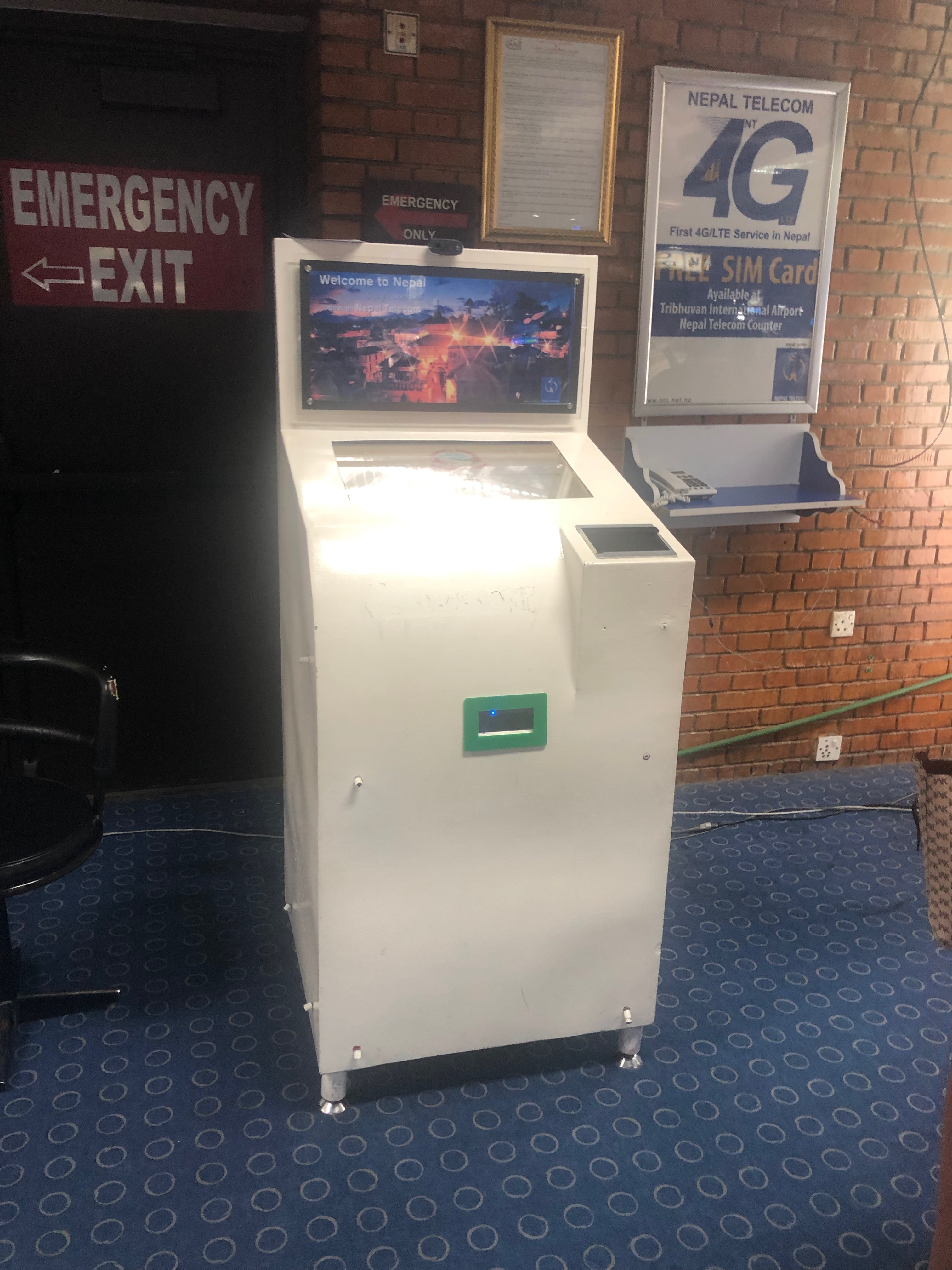
As a Filipino, I needed a visa to enter Nepal, which can be easily acquired upon arrival. Before you travel to Nepal, I suggest that you check the visa requirements for your nationality. Visa for 15 days costs only $25, and you can pay it from the counter after filling up an online form using the machines provided at the airport. There are many friendly local workers at the airport that help tourists in filling up the visa form. As I was patiently waiting for my turn, I noticed many tourists visiting the country, which created an impression that Nepal must be really beautiful!
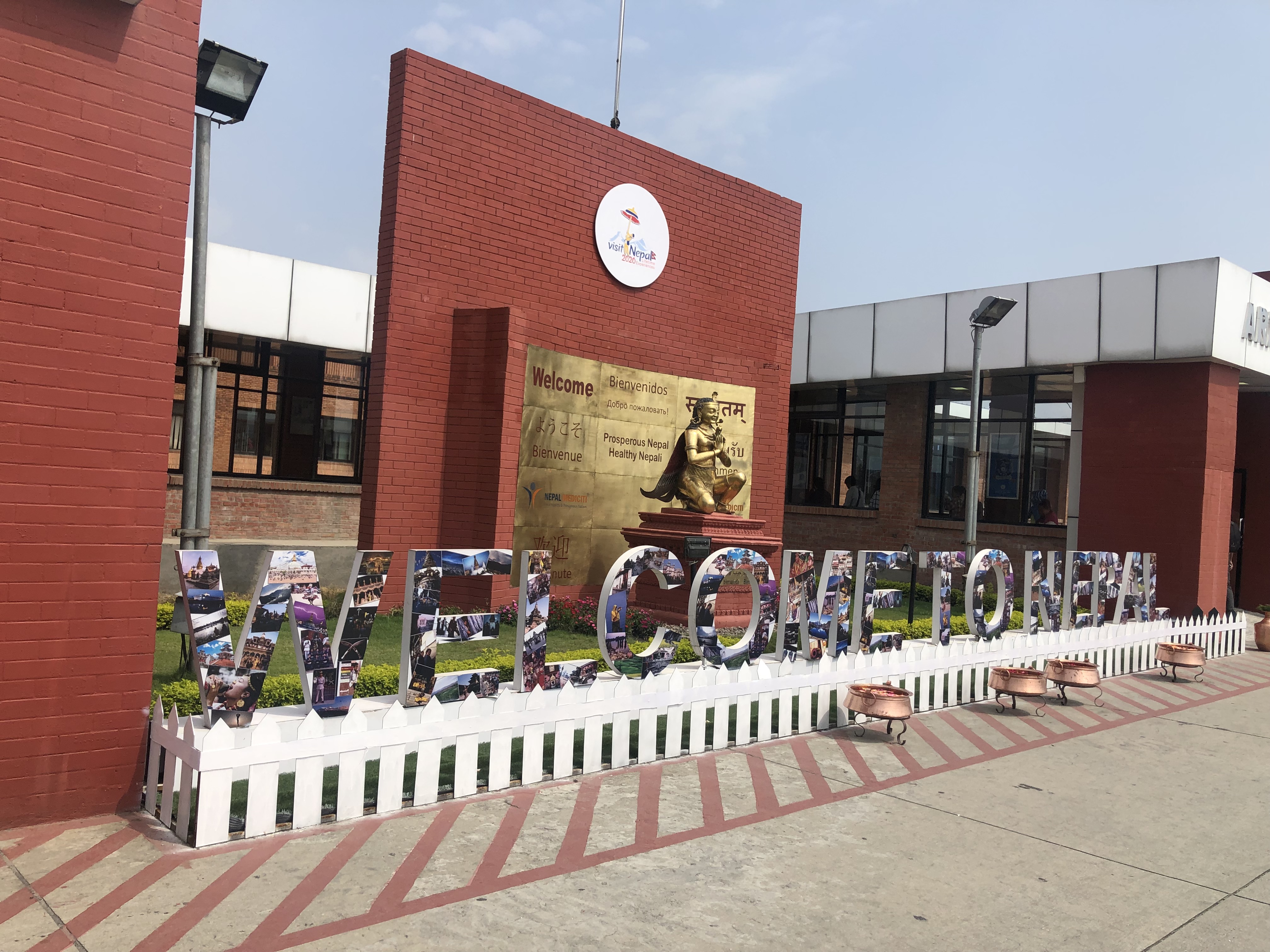
With all the formalities done: visa acquired, immigration passed, passport stamped, shades put on… Welcome to Nepal!
My very challenging first day in Kathmandu
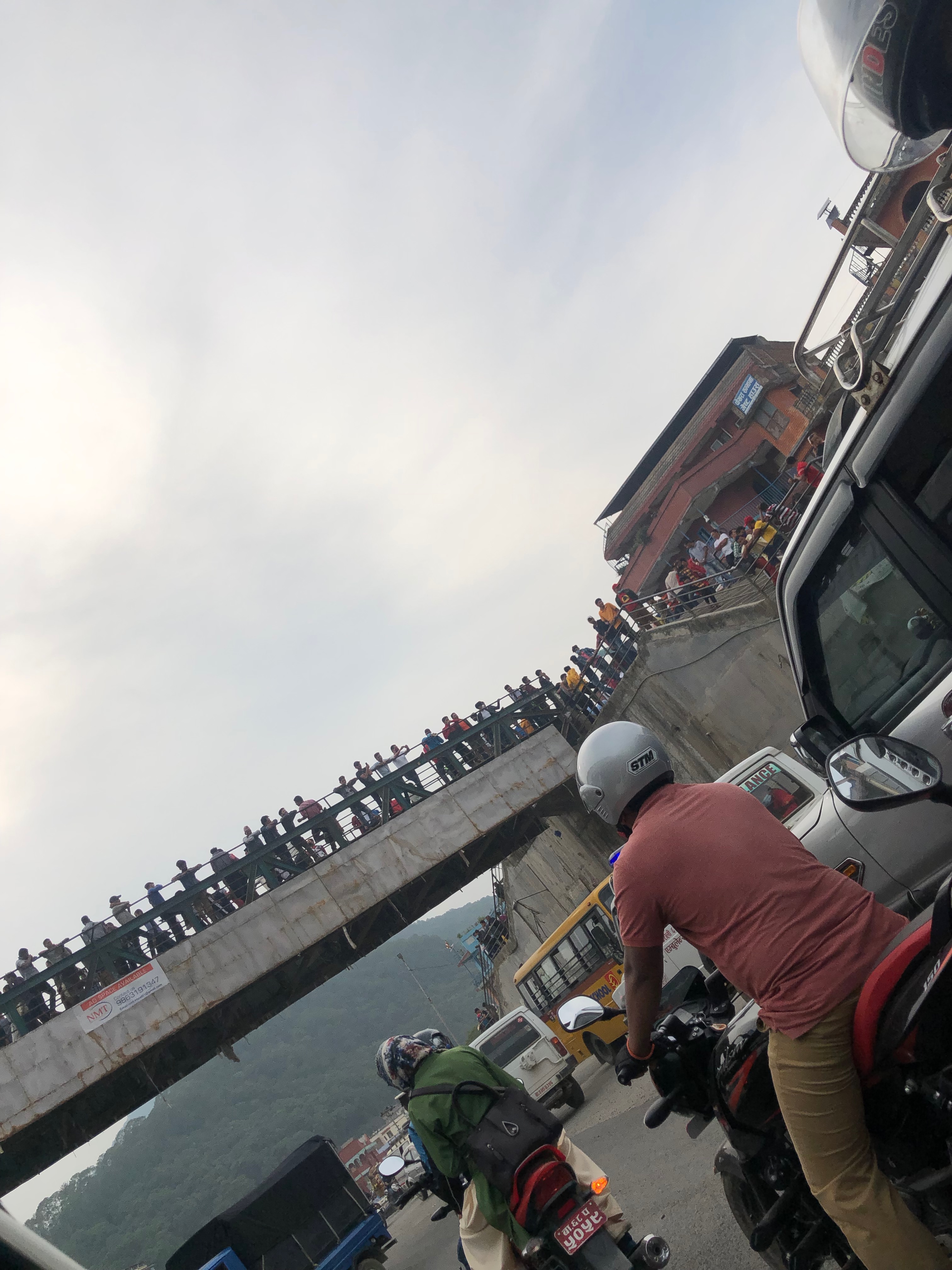
It’s been a long time since I last experienced culture shock. The last one was when I first set foot in the Middle East — Saudi Arabia. On my first day in Nepal, I felt a pang of estrangement as we were driving through the hectic highways of Kathmandu. It felt odd because I have many Nepali friends in Qatar and they are all friendly, but to be right there in their country was a totally different experience.
Kathmandu is the capital city of Nepal. Like many other capital cities in the world, Kathmandu is a very busy place. At first, I felt uneasy because aside from the fact that I am not used to right-hand drive vehicles (and I don’t think I will ever get used to it), the city was far from what I expected. But then again, I could only be having wrong expectations that time since I was not able to research about this country in the first place. For me, Kathmandu wasn’t really appealing the first time I saw it. The city was too busy that I had to literally meander between people while trying not to be hit by a random motorcycle, as they would just appear from nowhere. The pollution is also a major problem even for the locals. And that was when I realized that I needed help to have a good start. Not being able to research seriously took its toll on me.
As much as I wanted to kick myself for doing so, I called my Nepali friend, Amara, in Qatar and asked if there could be anybody who can help give essential information about the country. Guess I wasn’t really meant to have a bad luck streak! Amara introduced me to Bimal and Sujata who both gave me a straw to grasp at. Bimal happens to own a travel agency named Patala Travel & Tours, Pvt. Ltd. He had been really helpful in every way he could so this agency deserves to be promoted. If you plan to travel to Nepal, contact Patala Travel & Tours, Pvt. Ltd. for all your travel needs!
The local experience
It was mid-summer and I was all sweaty and feeling dirty so I asked Bimal and Sujata to help me find a hotel where I can rest and take a nice shower. They managed to book me a hotel for $20 a night. There are many cheaper hotels in Kathmandu ranging from $8 to $20 a night, but this is where you can best experience the saying that “you get what you paid for!” haha! The hotel I had before does not have a water heater and the tap water in this city can be very chilly. Anyhow, I took a quick shower and a nap after because Bimal would pick me up after his work to show me around. Take note, he was doing it for free because he said he really felt comfortable with me since I look like some of his friends. No BS; it’s amusing that many people thought I was a local! Some actually talked to me in their local language and I would just nod – acting like I understood whatever they were saying, while Bimal would secretly laugh from my peripheral view.
Since I have inadequate knowledge about Nepal, Sujata and Bimal agreed to arrange my itinerary for the next four days. On the first day, we visited various landmarks in Kathmandu, mostly temples. On the following day, I took a flight to Pokhara and stayed there for two days, then went back to Kathmandu by bus to continue the tour.
Swayambunath Stupa
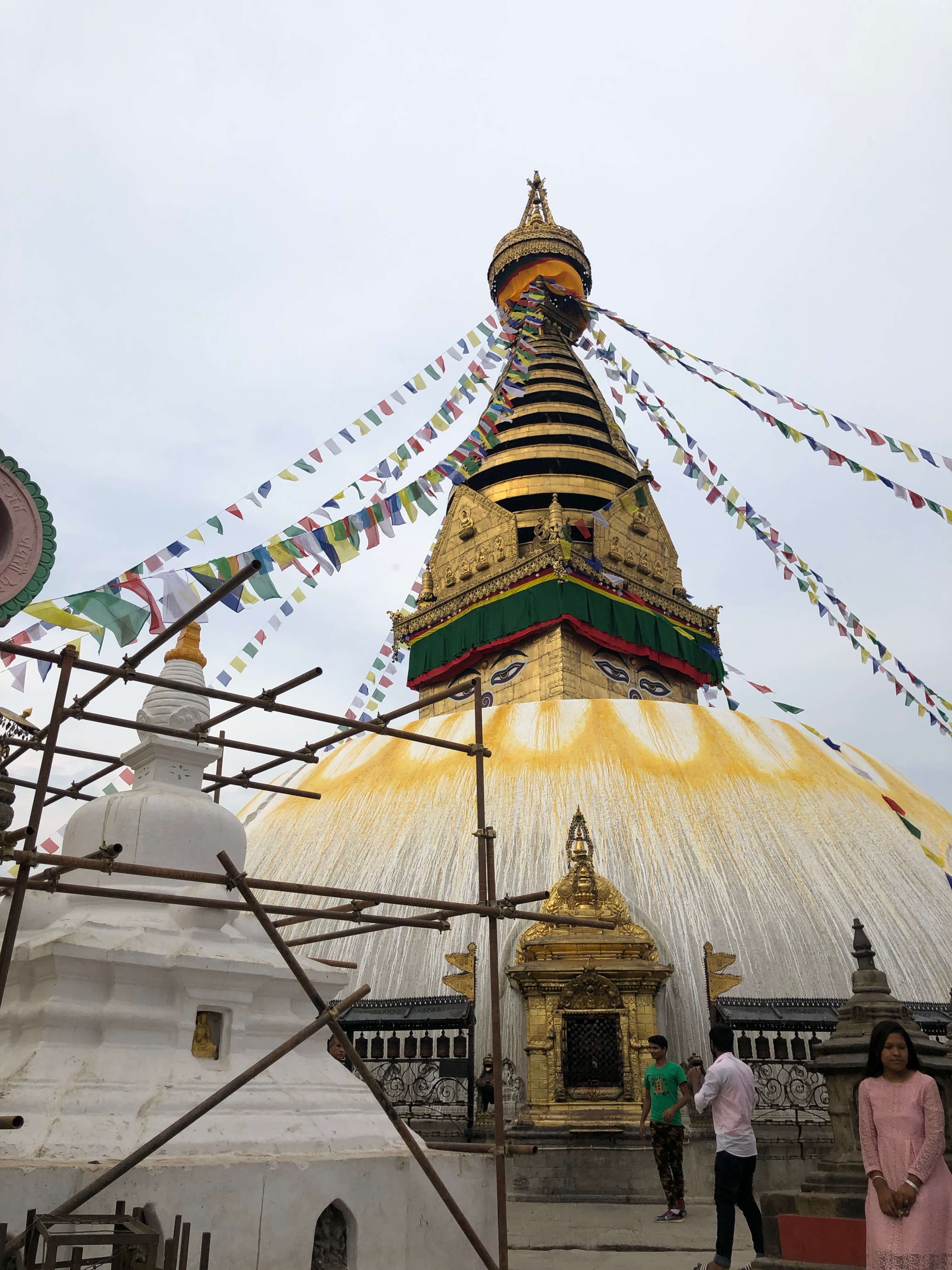
Atop a hill in Kathmandu Valley, where you can also enjoy the panoramic view of the whole city, is the Swayambunath Stupa. It is one of the holiest Buddhist temples in Nepal where the largest image of Shakyamuni Buddha sits. To be able to reach the top, you’ll have to face quite a challenging flight of steep stone steps. For the lucky ones with vehicles, there is also a road going up and it’s just a short walk from there to the temple. And since I am not really a fan of trekking, I used the “we don’t have much time” excuse to mask my laziness, and we took the latter option by renting a vehicle. No questions asked. Haha!
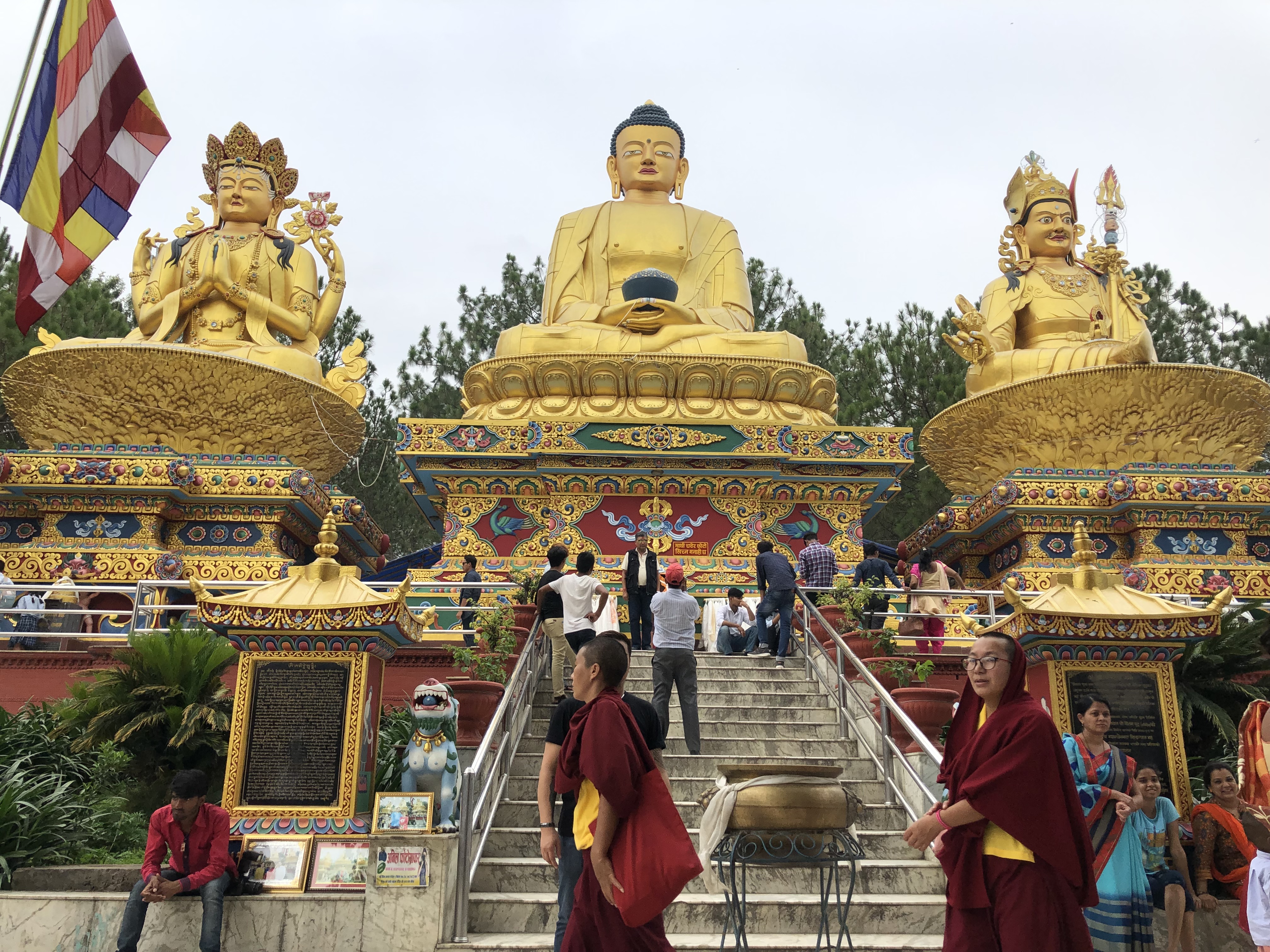
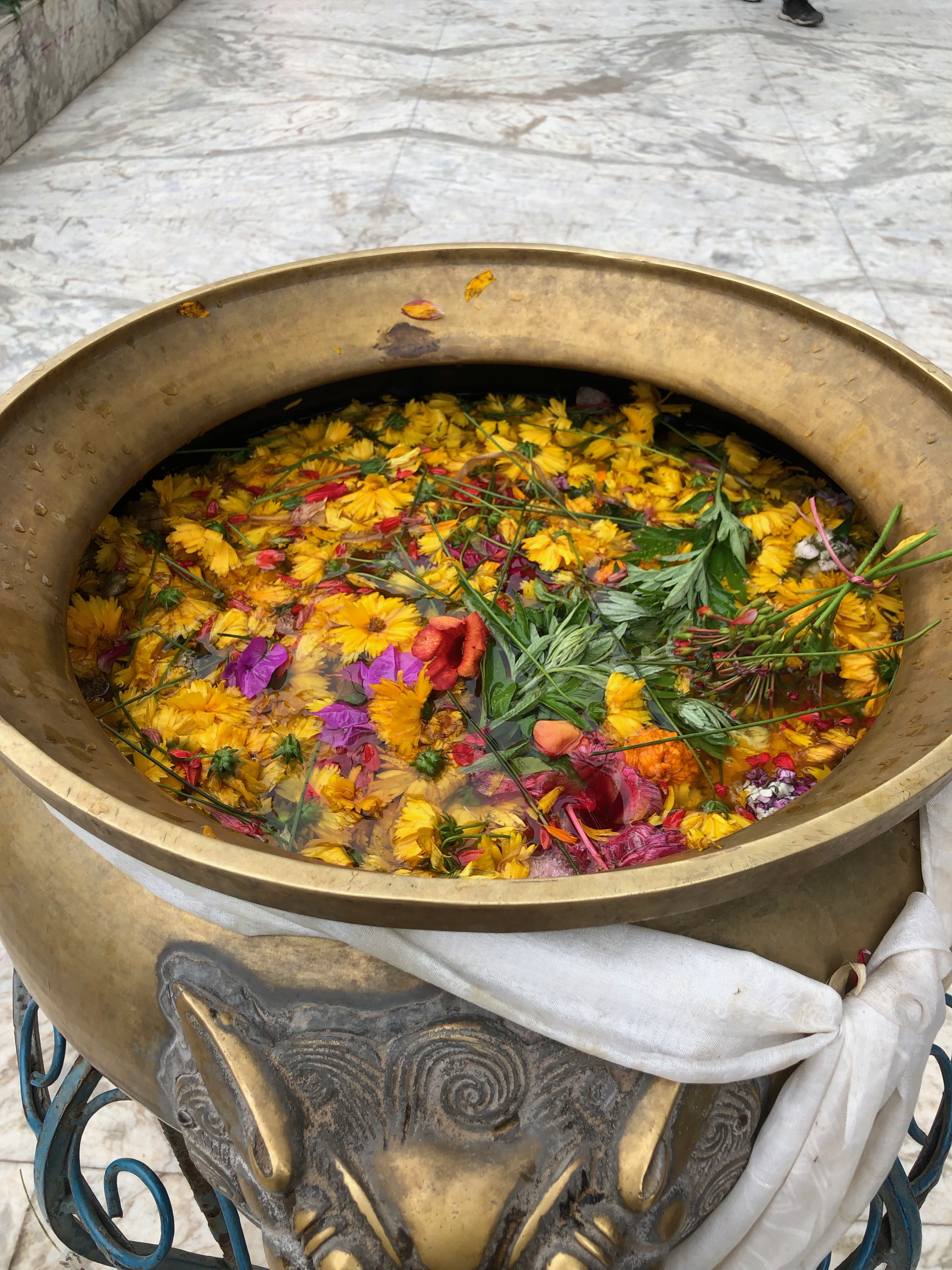
No doubt when you reach the top, it is really peaceful and you will feel the religious ambience of the temple. Since it was my first time to be in a Buddhist temple, I was amazed by how the religion is being practiced – the prayer wheels, the colorful flowers floating on water in a metallic gold pot, the smell of incense, and the rhythm of the people worshipping – it was really awe-inspiring to witness all those and learn about their significance.
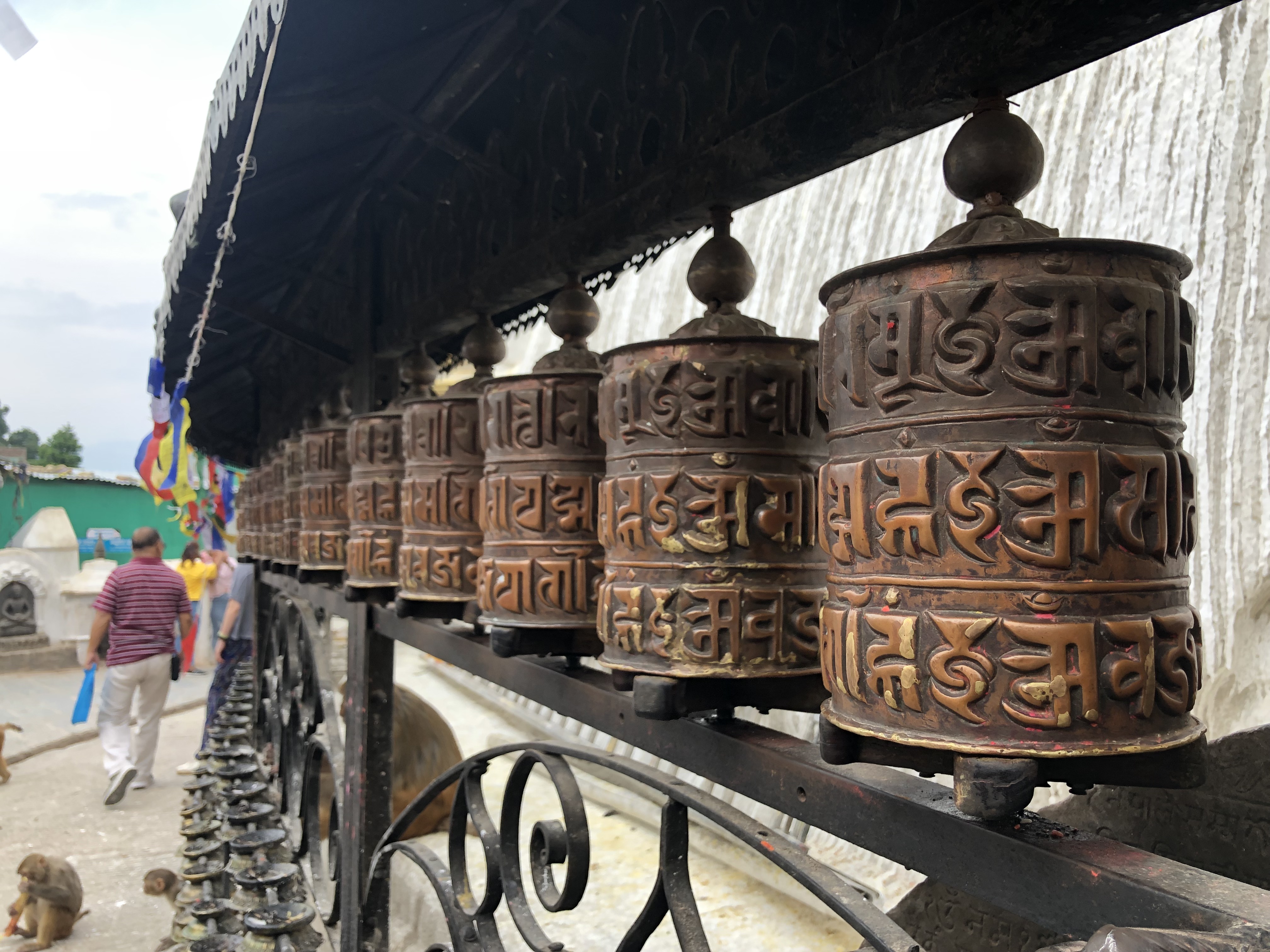
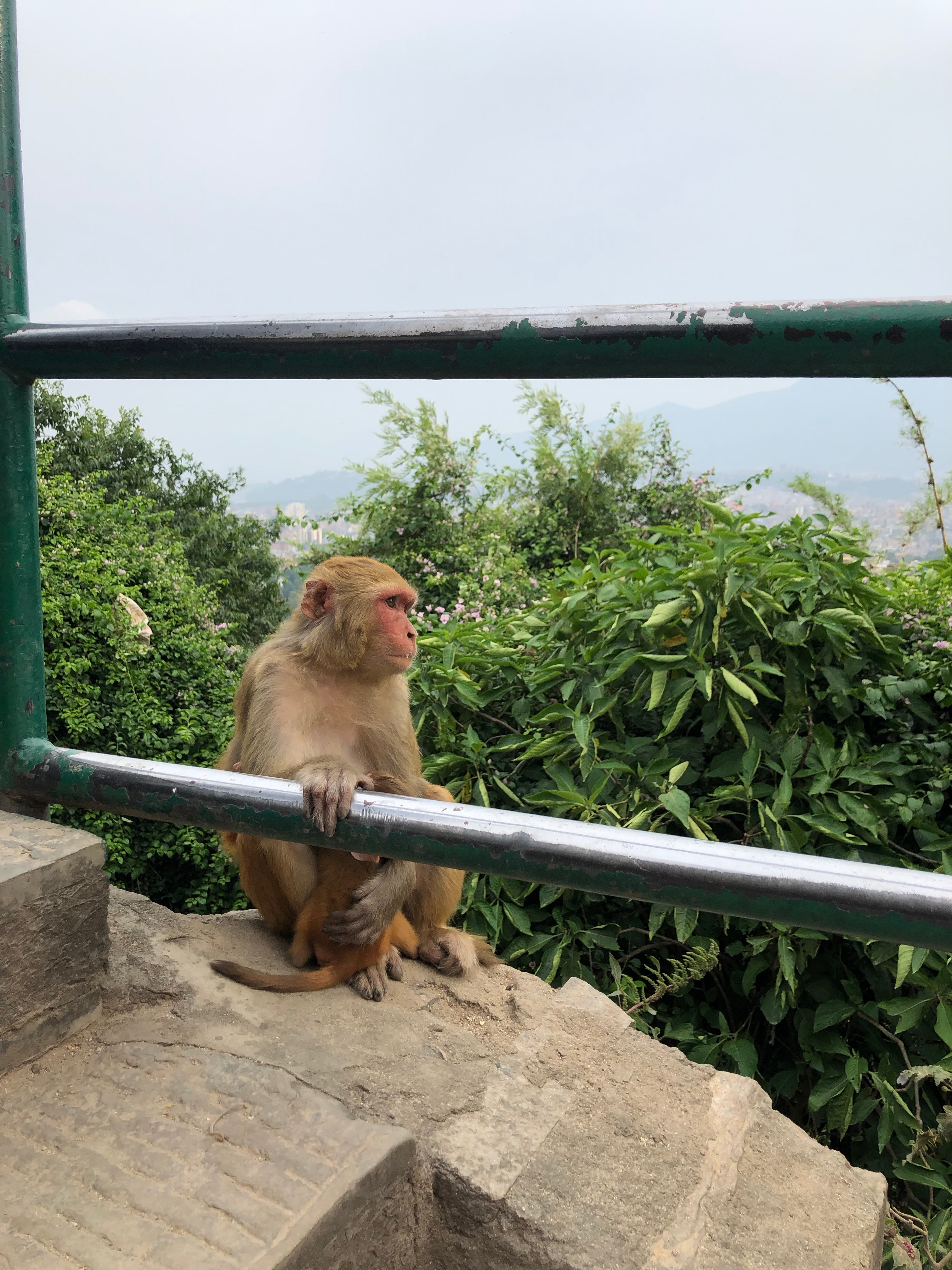
However, beware of snatchers in Swayambunath Stupa. No, I am not talking about humans, but rather monkeys which are everywhere! I witnessed some of them stealing food and other things from people. That’s why this place is also known as the Monkey Temple. I whispered a joke to Bimal as we were walking down from the top that the place was full of monks — and monkeys! Not funny enough? Ok! Next topic.
Patan Durbar Square
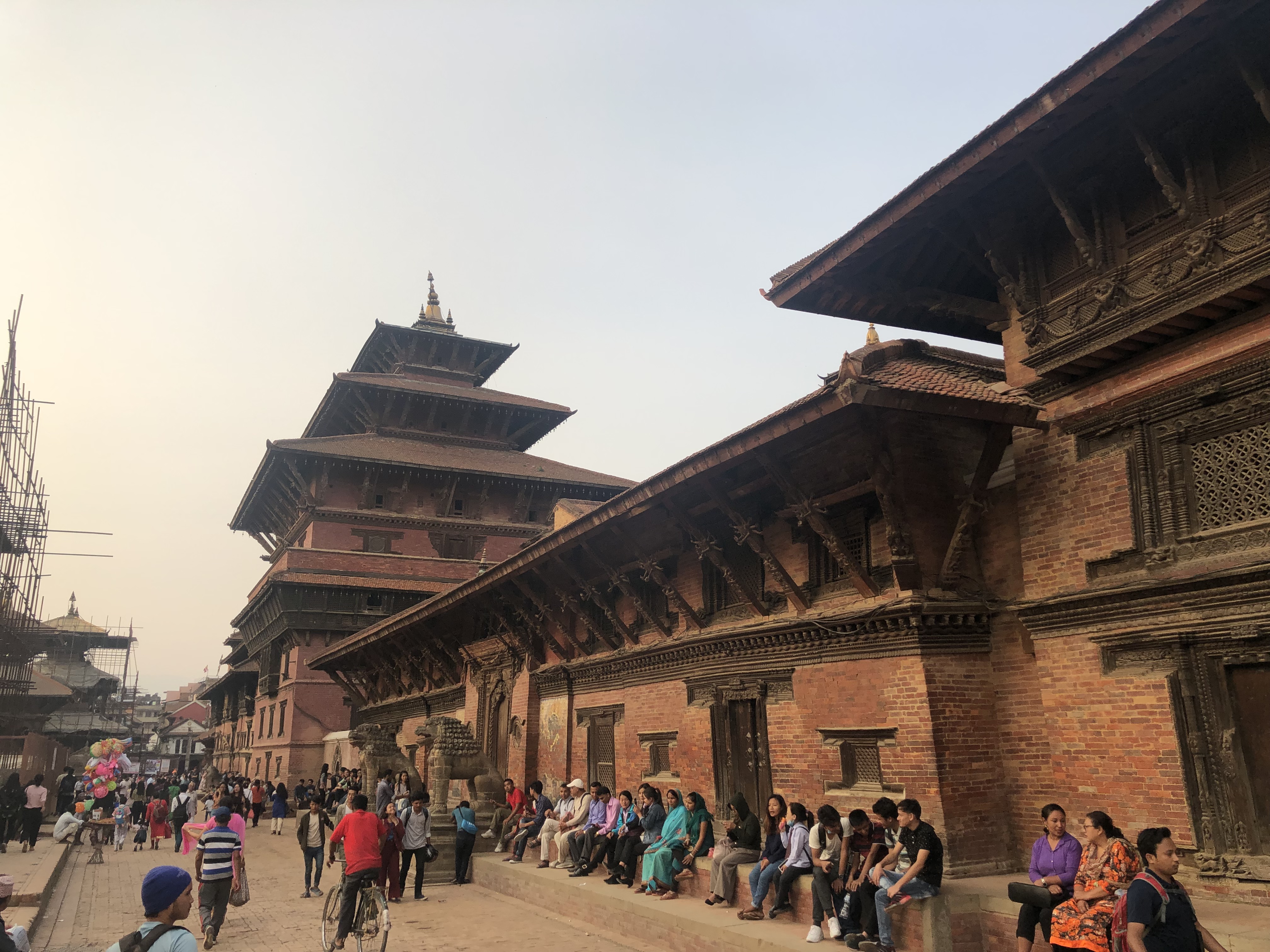
Durbar Square means Royal Square. This is what the plazas and areas opposite the old royal palaces in Nepal are called. All three durbar squares in the Kathmandu Valley are part of the UNESCO World Heritage Site. Patan Durbar Square is one of those.
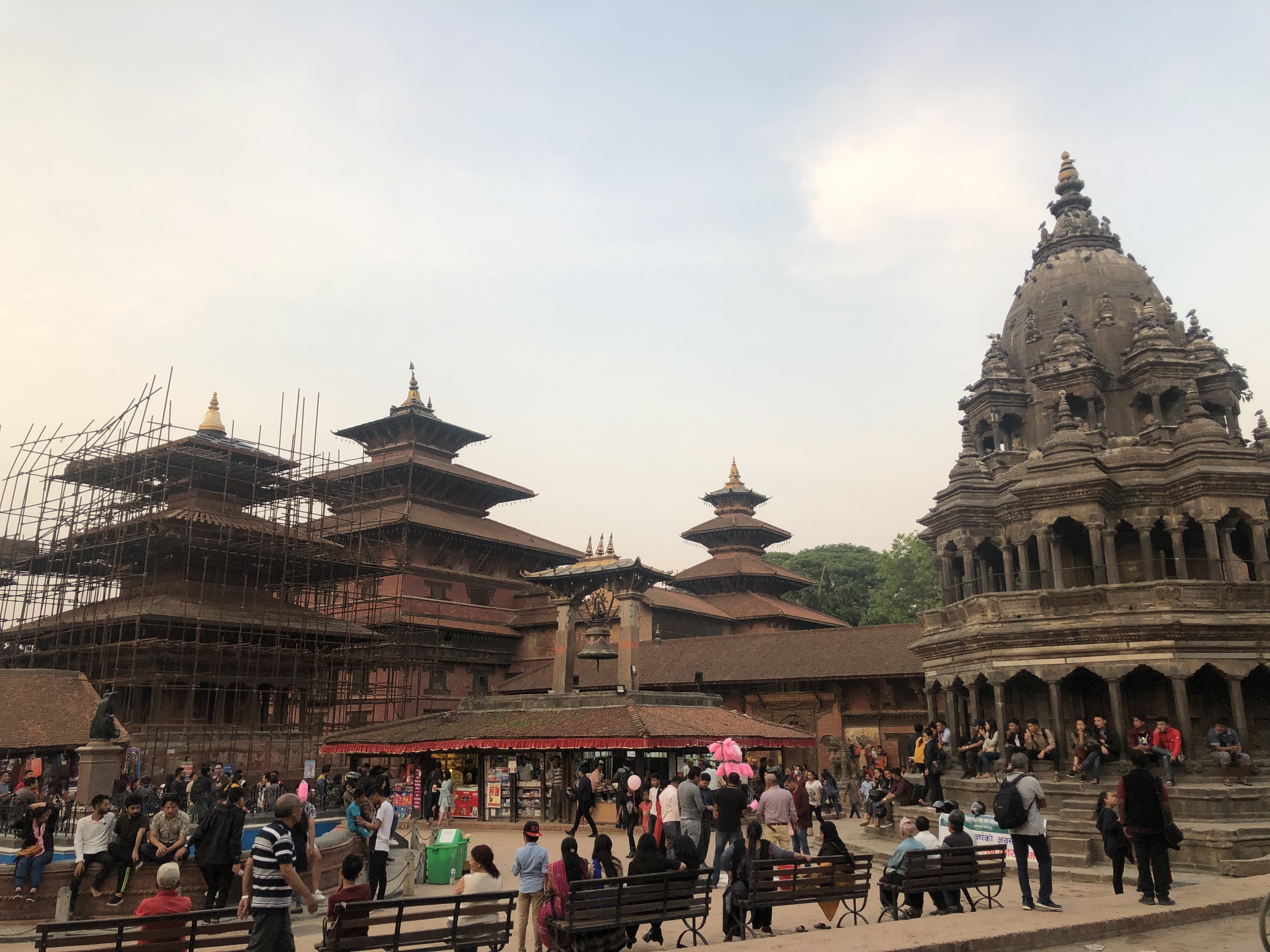
The square gives a taste of Nepal’s history. The palace has now become a museum but as of late, it is closed due to the ongoing restoration. Many parts of the palace were destructed by the Gorkha Earthquake that has killed thousands of civilians back in 2015.
The Kumari
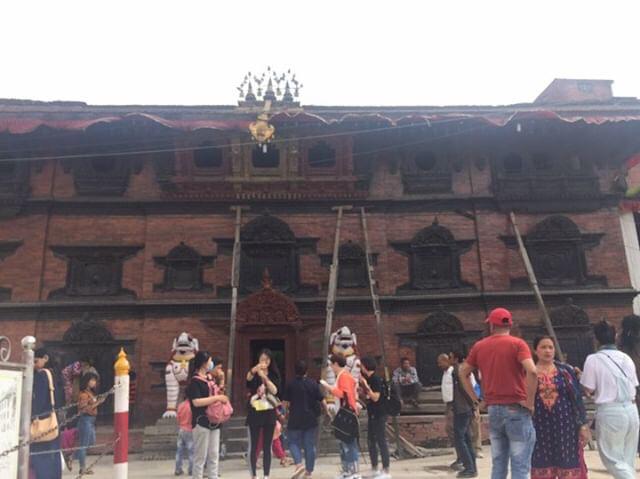
This is one thing that really ignited my curiosity. Kumaris are the living Goddesses worshipped by Hindus and Buddhists. They are girls on their pre-pubescent stage that were chosen because they possess certain standards. The eligibility, however, is quite peculiar. To name some, for a girl to be a Kumari, she must not have gotten any disease, lost a single tooth nor a drop of blood from her body from the day she was born. Hindus and Buddhists believe that Kumaris receive the power of the Goddess Kali and Taleju, and is an incarnation of Goddess Taleju who symbolizes power and protection.
There had been arguments about how the Kumaris shall live their lives though. Apparently, the Kumari system puts pressure to the human and children rights activists of Nepal. Traditionally, once a girl is chosen to be a Kumari, she has to leave her house and her family at a very young age and spend her days isolated in a Kumari house, an old palace building without modern facilities, until a new Kumari replaces her. Aside from not being able to experience a normal childhood life, they weren’t given proper education and knowledge about social life and surroundings. Thanks to the human rights activists, Kumaris are now being provided with a personal tutor and education. The girl will stay as a Kumari Goddess until she begins her first menstruation, or if in any case, she would suffer from a cut and loses a single drop of blood. That’s when the new search for a Kumari shall begin.
Local food experience
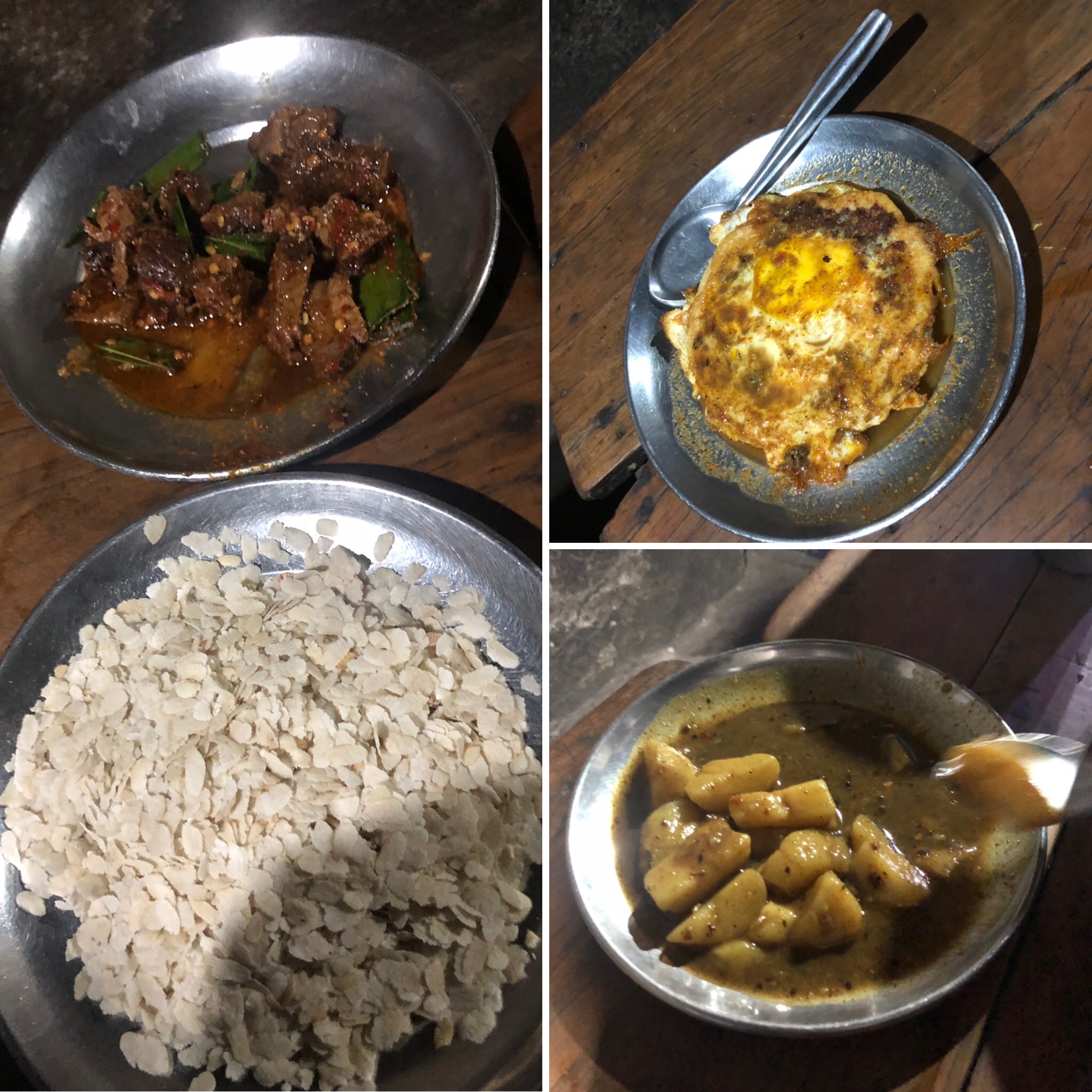
Travelers! You have not truly experienced everything to the fullest if you did not get to taste a country’s local food. I asked for a local experience and I got more than what I asked for! We hopped in five or more places to eat before Bimal and Sujata finally found what they wanted me to try. They brought me to a place similar to what we call “carinderia” in the Philippines. Carinderia is a food stall with a small seating area that serves cheap local delicacies. I have been warned about the food before we took the order as Nepalese food can be very spicy, and if you have a sensitive stomach, you will end up sh*tting your guts out. Because that’s exactly what happened to me. I am not sure if that was because of the food or the way it was served, which, to be honest, made me raise my eyebrows. Imagine my shock when I saw the server use his bare hands to put the food on the plate. Nevertheless, I ate the food and it was actually good even though it was way too spicy for me. The highlight was the Nepalese alcoholic beverage called “Chhaang”. It is a home-made rice wine famous in the Himalayas and is served hot during the wintertime, similar to the Japanese Sake. I had too much chhaang that it killed all the spiciness left in my mouth — and I ended up drunk. Haha!
All the way to Pokhara
Pokhara is a city in Central Nepal more than 200 km away from Kathmandu. Since this city is famous for sports and nature activities, this is where most of the tourists usually go. There are several ways to go to Pokhara. Aside from renting a private vehicle, you can either take a tourist bus, a local bus, or a plane. If you are really adventurous and would like to taste the local life of Nepal in level 100 experience, you can take the local bus for Rp. 500 (about $5). The local bus leaves as early as 7am, without air-conditioning, and can get really bumpy, plus there’s a chance to travel with either a goat or a chicken, or both. Another option is to take the tourist bus ranging from $15 to $20 which can be a lot more comfortable for a long ride. Just prepare your butt for a 7-8 hour (including stopovers) bus ride. If you are running short of time, you can take a plane for $120 and you’ll reach Pokhara even before you get to finish your coffee.
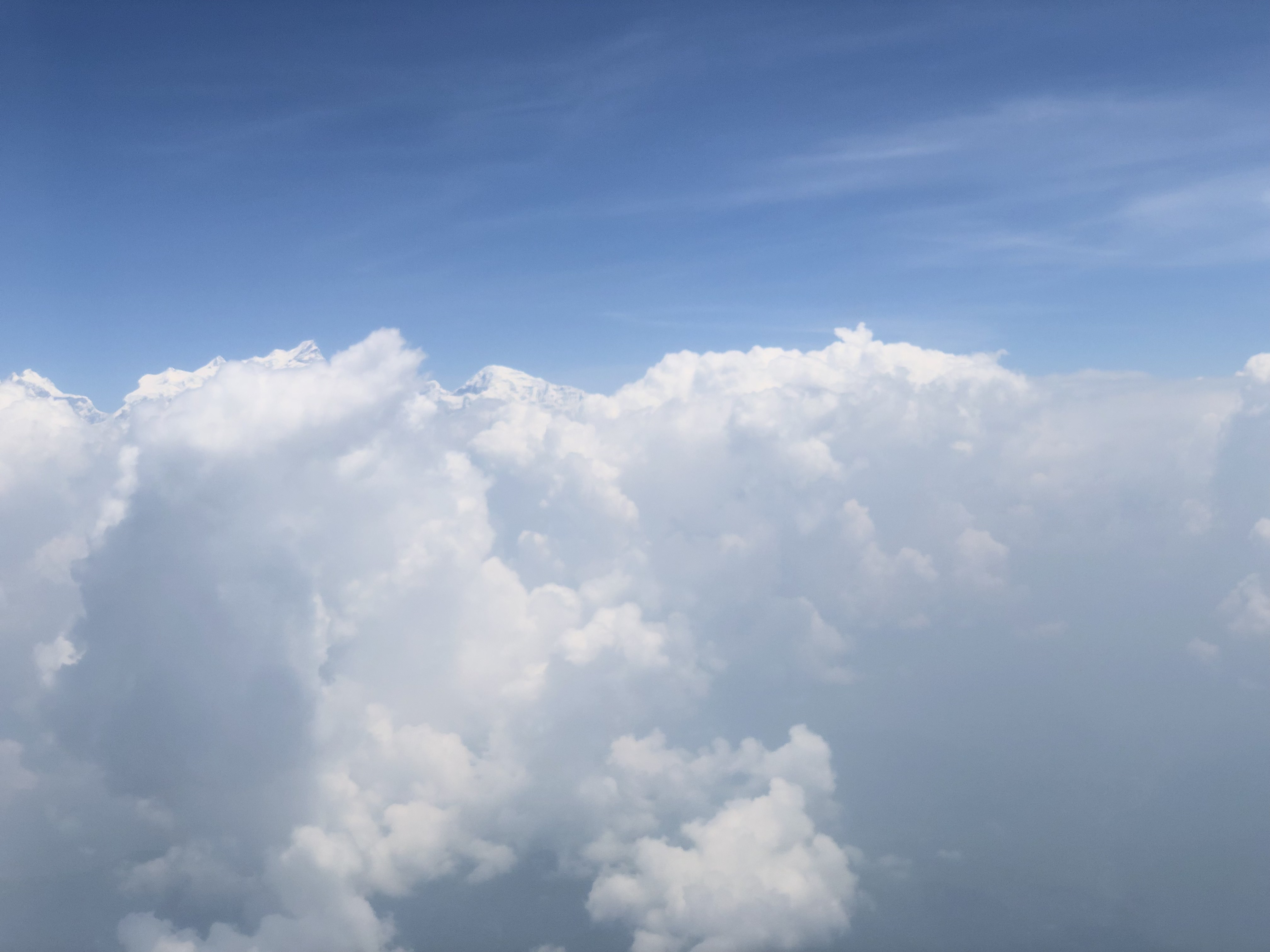
Since my first day was quite hectic and tiring, I totally missed the 7am tourist bus (as expected). I had no other choice but to take a flight to Pokhara. Though I didn’t have much money, I didn’t want to waste time either because I only had five days in Nepal. So, I really had to go on that day, or else I would miss the opportunity and I would regret it later on. Guess $120 was all worth it because on the plane, you’ll get a glimpse of the snowcapped Himalayas. I was left in awe! It was so beautiful. I would even recommend to at least take either of the way through plane.
Conquering my fear through paragliding
I am aerophobic. That’s a fact. I cannot even look over from a 10-storey building’s rooftop. Imagine paragliding! That was a decision I have never even thought I would do, and believe me, I had no regrets at all. Paragliding costs $100 for foreigners (note: activities have different prices for locals and Indians) and can only be done in the morning when the wind trajectory is considerably high. We drove to the highest point of the Sarangkot mountain for the take off. As Kamal, a professional paragliding pilot, prepared the parachute for our departure, I was hesitant and I could feel that the people around me can literally hear the pounding of my heartbeat. He had to ask me three times to make sure that I was ready and really wanted to proceed. There’s no room for a cold turkey! Without thinking of any other thing, I said yes! He started putting the harness around my body while giving me instructions for a smooth take off. As much as I wanted to focus on what he was saying, the rigidity that I was feeling seemed unbreakable – I was literally shaking and I felt like I wanted to take a piss haha!
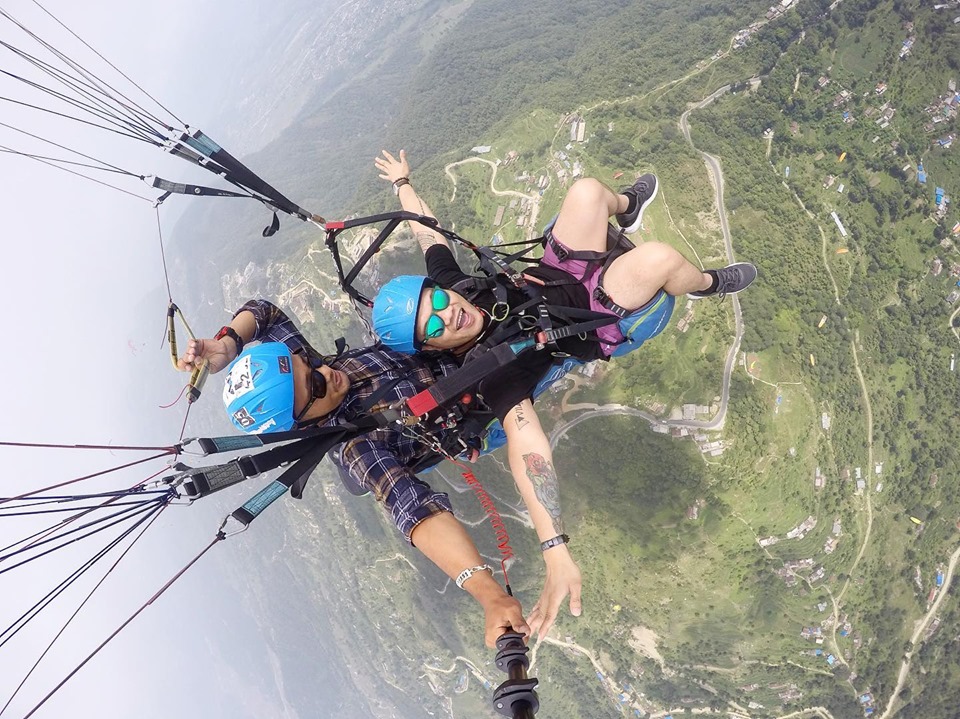
When he’s done securing the harness, we waited for a good wind blow, and he asked me to start running towards the edge of the cliff! Whaaaaat the…??!! For a moment I thought I lost consciousness as the wind swiftly pulled us up. Then there we were, like a bird, flying free in the sky! The feeling was almost inexplicable. I started feeling easy and relaxed, yet at the same time, I was feeling tipsy. The acrobatic stunts caused turbulence, which in turn gave me a feeling that something’s trying to dig deep or crawl in my stomach. Kamal kept on reminding me not to look down and free my body from any tension. But man! How could I not look down? Though we were terrifyingly high, the view was just so amazing! We started to ascend even higher until we were surrounded by the clouds. There, I could really feel it. The refreshing droplets on my face coming from the fog – I was feeling renewed! How bewildering it was to conquer my fear! I was all chilled and delighted by the experience. If only I didn’t have a hangover from the previous night’s event, I would have asked to extend the flight.
Shanti Stupa
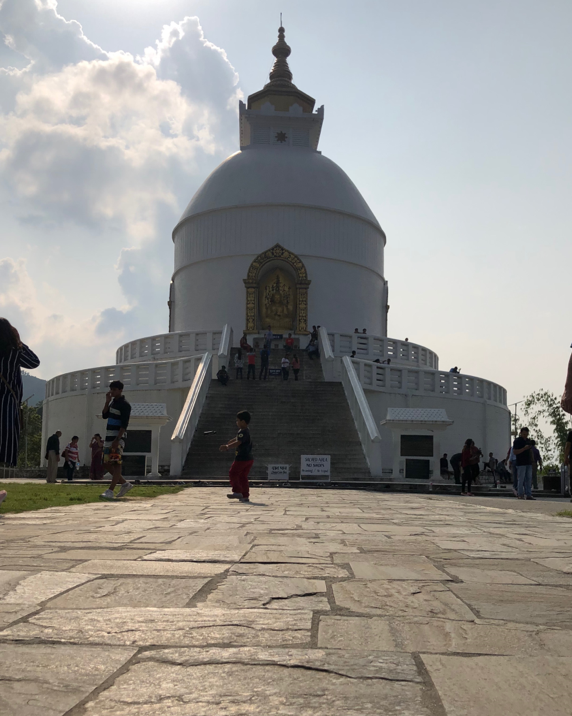
Shanti Stupa is a Buddhist pagoda-style monument and one of the major tourist attractions in Pokhara. It still puzzles me why Buddhists have to put their temples on very high places. We had to climb a long flight of stairs to reach the top. It was worth it though. You’ll get to see the whole city from a bird’s eye view. The cool wind will surely reset you for your climb down the steps back to main road. Together with my two great companions, Aashis and Amrita, we tried to count the steps as we descended. It was more or less 420 steps between sweat and gasping.
Kathmandu: the second time around!
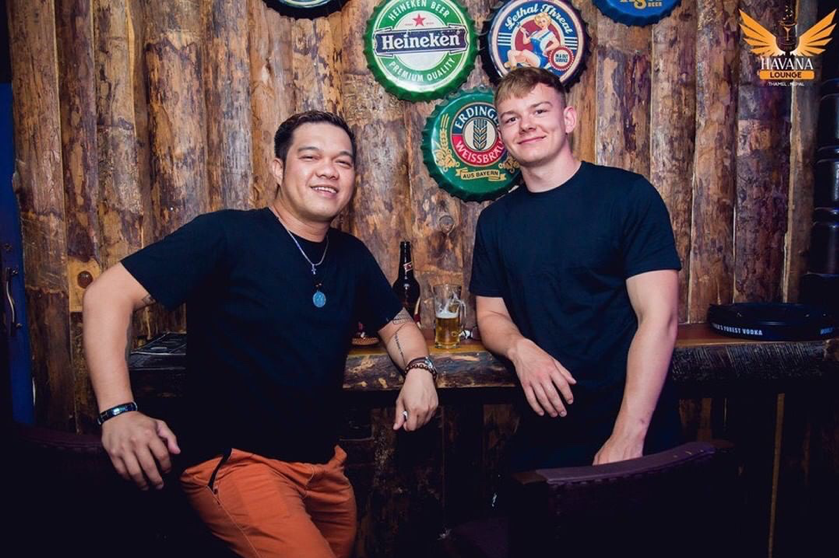
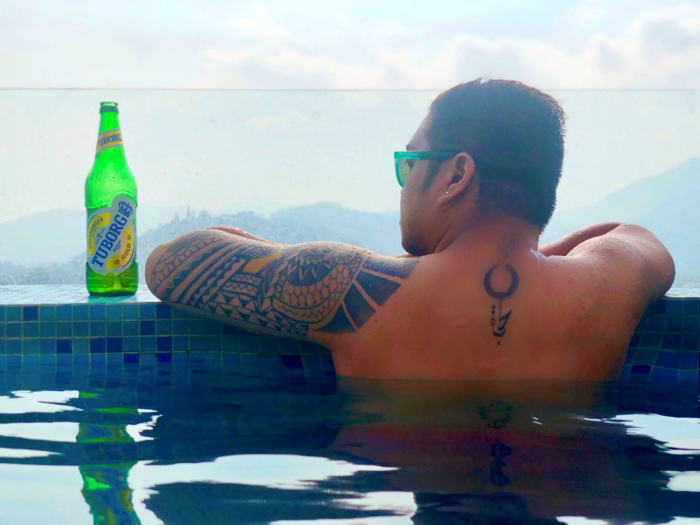
As much as I wanted to extend my stay in Pokhara, I did not have enough time. I took the night tourist bus at 8pm and I arrived to Kathmandu at half past four in the morning. I decided I would take a hotel in Thamel because I still had one more night to spend in the country and Thamel is where the bright lights are. I got a room from the Beautiful Kathmandu Hotel for $40. I paid $40 because the hotel has a pool and I only wanted to relax before I fly back to Qatar the next day. Or so I thought. It turned out my visa wasn’t ready yet. I had to transfer to a cheaper inn in Thamel that day. That’s where I met my new buddy, Jake, from the UK. It was his first night in the country while it was my last. We went out to explore the night life in Thamel and I gave him some helpful tips about the country; tips that I have only recently learned from my own experience. In my opinion, Thamel is the best spot to stay when in Kathmandu. Everything you may need is available just around the corner: groceries, souvenir shops, money exchange, bars, lodges, etc. I realized that I should have known that when I arrived there. On my last night, I was also wishing I could extend even for just one more day because there were so much more to see in Kathmandu. I came to a conclusion: it’s really true, sometimes the end is just the beginning!
Currency
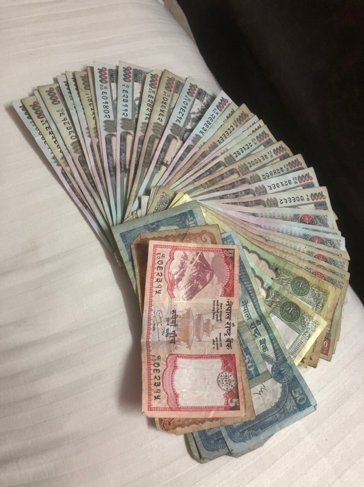
$1 is equivalent to 110 Nepalese Rupee. I thought I had a lot of money. I exchanged $300 and got around 33,000 Rupees. My wallet was thick but it did not last long haha! The cost of living is incredibly cheap. This may be the reason why Nepal is a famous destination for backpackers.
Transportation
The main transport means in Nepal is by taxi with a minimum fare of 200 Rupees. The taxis usually don’t have air-conditioning, and most of them do not use meters. Making a deal with the driver before you ride will save you from being ripped off. I am saying this based on my own experience; I once paid 1000 Rupees for a minimum price travel. Some drivers will also try to outtalk you about the activities in Kathmandu and even in Pokhara. There is nothing wrong with that, they are only trying to be helpful. However, if you are on a shoe-string budget, you’ll get to save if you can arrange everything by yourself. Everything in Nepal is accessible in the world wide web anyway.
Accommodation
There are many cheap hotels in Nepal starting for as low as $8 per night. As I said earlier, this is where you will best experience the saying that you get what you paid for. $15 to $20 per night will be comfortable enough with air-conditioning, a water heater, and a private bathroom. In Kathmandu, find a hotel in Thamel area as this place is accessible to everything. There are also five-star hotels ranging $100 and above. Booking.com or AirBnb will be very useful.
All in all, my experience in Nepal was priceless. I went back to Qatar full of stories to share with my friends. Traveling is just not about going to places and taking pictures to post on Facebook and Instagram, it is also a chance to learn what life is for people from the other side of the world. Nepal is indeed an eye-opening experience.
“A Nepali outlook, pace and philosophy had prevented us being swamped by our problems. In Nepal it was easier to take life day by day.”
– Jane Wilson-Howarth
Special thanks to all the people who I have encountered during my stay in Nepal. Bimal, Sujata and Rojith who made my stay in Kathmandu easier and worthwhile; Aashis and Amrita who went extra mile so I can maximize my stay in Pokhara; and to Amara who helped me in every way possible all the way from Qatar. For all of us, life is beautiful!
 Erwin's Blog